
Dealing with acne is not just a teenage problem. Millions of adults wake up every morning, look in the mirror, and feel frustrated by breakouts that just will not go away. You try one product, it does not work. If you try another, your skin gets worse. It is a cycle that wears you down over time. The good news is that clearing acne-prone skin is possible – but it needs the right approach, not just the most expensive serum on the shelf.
If you have been struggling for a while without results, the team at Hillside Family Medicine has helped many patients in your exact situation. Their acne treatment program in Acworth, GA goes beyond surface-level fixes and gets to the real cause of persistent breakouts.
This guide covers everything you need to know – the right daily steps, the ingredients that actually work, habits that help your skin heal, and when it is time to bring in a professional.
Why Acne-Prone Skin Needs a Different Approach?
Not everyone’s skin behaves the same way. People with acne-prone skin have pores that clog faster, oil glands that produce more sebum, and skin that reacts more strongly to bacteria and inflammation. What works perfectly for someone else may completely break you out.
Acne forms when dead skin cells and excess oil get trapped inside a pore. Bacteria grow inside that blocked pore, the skin becomes inflamed, and a pimple forms. For some people this happens occasionally. For others it happens constantly, no matter what they do.
Things that commonly make acne worse:
- Hormonal changes – periods, pregnancy, stress, and certain medications all affect oil production
- Diet – foods high in sugar and refined carbohydrates push the skin to produce more oil
- Wrong skincare products – thick creams, heavy foundations, and products with pore-clogging ingredients make things worse fast
- Touching your face – your hands carry bacteria that transfer straight into open pores
- Not moisturizing – when skin gets too dry, it produces extra oil to cope, and that oil sits in the pores
Once you understand why your skin breaks out, building a routine around it becomes much easier.
Step-by-Step Skincare Routine for Acne-Prone Skin
Step 1: Wash Your Face Twice a Day – But Do It Gently
Morning and night, use a gentle cleanser that is labeled non-comedogenic. That word means it will not block your pores. The point of cleansing is to clear away oil, sweat, and dirt – not to scrub your skin raw. Harsh cleansers and rough scrubbing damage your skin barrier, cause more oil production, and make breakouts worse.
Look for these ingredients in your cleanser:
- Salicylic acid – gets inside the pore and breaks down the buildup causing congestion
- Benzoyl peroxide – kills the bacteria that cause inflamed, painful pimples
- No fragrance, no sulfates, and nothing that leaves your face feeling tight after washing
Step 2: Use a Toner If Your Skin Needs It
Toner is not essential for everyone, but it can help acne-prone skin stay balanced between washes. After cleansing, your skin’s pH can shift slightly. A good toner brings it back to where it should be and helps your treatment products absorb properly.
Go for alcohol-free formulas. Niacinamide, low-percentage witch hazel, and glycolic acid are all good options. Skip anything that lists alcohol high up in the ingredient list – it dries out skin badly and causes more problems than it solves.
Step 3: Apply Your Acne Treatment
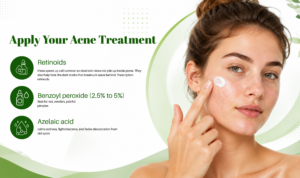
This is the most important step in the whole routine. After cleansing and toning, apply your acne treatment directly to the areas where you break out. The most effective ingredients for this are:
- Retinoids – these speed up cell turnover so dead skin does not pile up inside pores. They also help fade the dark marks that breakouts leave behind. Prescription retinoids are much stronger than what you find in stores
- Benzoyl peroxide (2.5% to 5%) – best for red, swollen, painful pimples
- Azelaic acid – calms redness, fights bacteria, and fades discoloration from old spots
- Niacinamide – reduces oiliness and helps with redness over time
One important thing – do not start using multiple actives at once. Your skin needs time to get used to each one. Add them one at a time, and if you are thinking about prescription-strength options, talk to a medical aesthetics specialist first.
Step 4: Always Moisturize
Skipping moisturizer because you have oily or acne-prone skin is one of the most common mistakes people make. Dry skin fights back by producing more oil. That oil clogs pores. More breakouts follow. It becomes a loop.
Use a light, oil-free moisturizer. Look for hyaluronic acid or ceramides on the label. These hydrate your skin without adding anything that sits in the pores or makes oiliness worse.
Step 5: Sunscreen Every Single Morning
A lot of acne treatments make your skin more sensitive to sunlight – retinoids especially. Without sunscreen, any dark mark left over from a healed pimple gets darker when exposed to UV rays and takes much longer to fade. This is called post-inflammatory hyperpigmentation and it is very common in people with acne-prone skin.
Use a non-comedogenic mineral sunscreen with at least SPF 30 every morning. If you are outside for a long time
Daily Habits That Make a Bigger Difference Than You Think

Your skincare routine only covers part of the picture. These habits affect your skin just as much:
- Change your pillowcase at least twice a week – it collects oil and bacteria from your face every night and puts it straight back on your skin the next time you sleep
- Clean your phone screen daily – phones press against your cheek and jaw constantly. They pick up oil and bacteria fast
- Drink enough water – hydrated skin functions better and recovers from breakouts faster
- Get stress under control – stress raises cortisol in the body, and higher cortisol means more oil production and more breakouts
- Stop picking at your skin – it pushes bacteria deeper, causes more inflammation, and leaves scars that take months or years to fade
When Home Routines Are Not Enough: Professional Acne Treatment?
A good home routine handles mild breakouts well. But if your acne keeps coming back no matter what you try, gets worse over time, leaves scars, or causes real pain, it is time to see someone who can properly assess what is going on.
At Hillside Family Medicine Clinic, the process starts with a thorough look at your skin – the type of acne you have, where it shows up, how long it has been happening, and what you have already tried. From that point, a plan is put together specifically for you. Treatment options at the clinic include:
- Prescription medications – both topical creams and oral tablets that work on oil production, bacteria, and inflammation at a much deeper level than store product
- Tetra CO2 laser – resurfaces the outer layer of skin to smooth texture and reduce the appearance of acne scars
- Virtue RF Microneedling – uses fine needles and radiofrequency energy together to rebuild collagen and reduce scarring over a series of sessions
You can see real patient results by looking through before and after photos on the clinic website.
If your main concern after acne is the dark patches or uneven skin tone it left behind, the clinic offers hyperpigmentation treatment and skin rejuvenation options that deal with exactly that.
Conclusion
Clearing acne-prone skin is not about finding a miracle product. It is about doing the right things consistently – washing gently, treating with the right actives, keeping skin hydrated, and protecting it from the sun every day. Most people who stick with a proper routine for two to three months see a real difference.
But some cases need more than a routine. If breakouts are deep, frequent, or leaving marks on your skin, professional treatment is the faster and smarter path forward. The team at Hillside Family Medicine Clinic in Acworth, GA has real options for every level of acne – from prescription creams to laser treatments that produce lasting results.
Call 770-485-0031 or go to hillsidefamilymedicine.org to book your appointment and get a plan that actually works for your skin.
FAQs
1. What order should I follow for my skincare routine if I have acne-prone skin?
Cleanser first, then toner if you use one, then your acne treatment, then moisturizer. In the morning, finish with sunscreen. That order matters because each product is designed to work on a certain layer of the skin, and applying them out of order reduces how well they work.
2. Will using moisturizer make my acne worse?
No. Skipping it usually makes things worse. When skin gets too dry, it produces more oil to make up for it, and that extra oil clogs pores. Use a light, oil-free, non-comedogenic formula and your skin will thank you.
3. How long until I see results from a skincare routine?
Give it at least six to eight weeks before deciding whether something is working. Skin takes time to respond. Changing products every two or three weeks means you never give anything a real chance to work.
4. Should I use salicylic acid or benzoyl peroxide?
They work differently. Salicylic acid goes into the pore and clears out the buildup causing blackheads and whiteheads. Benzoyl peroxide kills the bacteria causing red, painful pimples. Many people use both at different times depending on what kind of breakout they are dealing with.
5. Can I use retinol if my skin breaks out a lot?
Yes, and it is one of the better options for acne-prone skin. It keeps pores clear and helps fade marks left by old breakouts. Start with a low strength a few nights a week and build up slowly. If OTC retinol is not making a difference, a doctor can prescribe a stronger version.
6. Does food affect acne?
For many people, yes. Sugary foods and refined carbohydrates cause blood sugar spikes that increase oil production in the skin. Some people also notice that dairy makes their acne worse. Eating more whole foods and drinking plenty of water generally supports clearer skin.
7. Is it worth going to a clinic for acne instead of handling it at home?
If breakouts are severe, painful, or causing scars, yes. Store products are not strong enough to reach the deeper layers of skin where serious acne starts. A clinic can offer prescription treatments and procedures that produce results home care cannot.
8. What causes acne scars and can anything be done about them?
Scars form when a breakout damages the tissue below the skin. Picking or squeezing makes scarring much more likely. Once scars are there, treatments like Virtue RF Microneedling and the Tetra CO2 laser can reduce how deep and visible they are.
9. Is it normal to still get acne as an adult?
Very normal. Adult acne is common well into the 30s and 40s. Hormonal shifts, stress, certain medications, and even your skincare products can all trigger it. Women especially tend to get breakouts along the chin and jaw linked to hormonal changes.
10. When is the right time to see a doctor about acne?
If your skin has not improved after two to three months of a consistent routine, if breakouts are painful or deep, or if you are starting to notice scarring, make an appointment. The sooner you get proper treatment, the less chance there is of long-term skin damage.