

High levels of fat in your blood – a condition called hyperlipidemia – is something many people are living with and do not know it. There are no warning signs. No pain, no visible changes. It shows up on a blood test, and by the time it does, it may have already been quietly affecting your arteries for years.
The good news is it responds well to treatment. At Hillside Family Medicine in Acworth, GA, we help patients get their cholesterol and triglycerides under control through a mix of medication, diet changes, and simple daily habits.
What Is Hyperlipidemia?
Hyperlipidemia means your blood has too much of one or more types of fat – most often LDL cholesterol (the bad kind), triglycerides, or both. It can also mean your HDL cholesterol (the good kind) is too low. This imbalance causes fatty deposits to build up inside artery walls over time, narrowing them and raising your risk of:
- Heart attack
- Stroke
- Coronary artery disease
- Peripheral artery disease
Causes range from genetics and poor diet to lack of exercise, obesity, thyroid problems, and diabetes. Getting a routine physical in Acworth, GA that includes a lipid panel is the only way to know where your levels stand.
Medications That Help
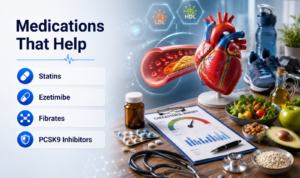
For many people, lifestyle changes alone are not enough – especially those with a genetic predisposition or existing heart disease. Your doctor will recommend the right medication based on your blood work and health history.
-
Statins
Statins are the most common treatment for high LDL cholesterol. They work by slowing the liver’s production of cholesterol. Examples include atorvastatin and rosuvastatin. They are well-studied and effective at reducing the risk of heart attacks and strokes.
-
Ezetimibe
This medication reduces how much cholesterol your body absorbs from food. It is often added when a statin alone is not bringing LDL levels down far enough.
-
Fibrates
Fibrates work best when triglycerides are the main problem. They speed up how the body breaks down fat in the blood and can also raise HDL slightly.
-
PCSK9 Inhibitors
These are injectable medications for patients with very high LDL – often those with familial hypercholesterolemia – who have not responded to other treatments. They can lower LDL by 50 percent or more.
If you want to discuss your medication options from home, our telehealth service makes it easy to speak with a provider without coming in.
Lifestyle Changes That Make a Real Difference
-
Watch What You Eat
Diet has a direct effect on your cholesterol and triglyceride levels. Cut back on fatty meats, butter, and fried foods. Add more fiber from oats, beans, and vegetables. Fatty fish like salmon and sardines bring in omega-3s that help lower triglycerides. Reduce sugary drinks and refined carbs, which push triglycerides up fast. Our nutrition counseling team can help you build a simple, realistic eating plan.
-
Move More
Regular physical activity raises HDL cholesterol and lowers triglycerides. You do not need to run marathons – 30 minutes of brisk walking most days is enough to see results. Consistency matters more than intensity.
-
Lose Some Weight
Even losing 5 to 10 percent of your body weight can bring LDL and triglycerides down noticeably. If weight has been a long-standing struggle, our medical weight loss program offers real, supervised support.
-
Quit Smoking and Limit Alcohol
Smoking lowers your HDL cholesterol and damages blood vessels. Quitting is one of the fastest ways to improve your lipid profile. Heavy drinking raises triglycerides – keeping it to one or two drinks a day at most helps keep levels stable.
Prevention Tips
If your cholesterol is currently fine, keeping it that way takes some attention. A few habits that help:
- Get your lipid panel checked every year – or more often if your doctor recommends it
- Eat mostly whole foods and limit processed snacks
- Stay active and keep your weight in a healthy range
- Manage blood sugar – diabetes makes hyperlipidemia worse
- Know your family history – if a parent or sibling had early heart disease, tell your doctor
Stress also plays a role. When cortisol stays high for a long time, the liver produces more cholesterol. Our behavioral health team supports patients dealing with chronic stress and anxiety that affect their overall health.
Who Needs Extra Attention?
Children with a family history of high cholesterol should be screened early – sometimes from age 2. Learn about our pediatric care in Acworth, GA. Women going through menopause often see LDL rise as estrogen drops – our women’s health services keep track of these changes. People with type 2 diabetes typically have low HDL and high triglycerides, making lipid management a key part of their care plan.
Conclusion
Hyperlipidemia is common, serious, and very treatable. The right mix of medication and daily habits can bring your numbers into a healthy range and reduce your risk of heart disease significantly. Do not wait for a health scare to find out where your levels stand. Call Hillside Family Medicine at 770-485-0031 or read more on our health and wellness blog. You can also contact us online to schedule your visit.
FAQs
1. What is hyperlipidemia?
It means your blood has too much fat – usually high LDL cholesterol, high triglycerides, or low HDL cholesterol. It has no symptoms but raises your risk of heart disease and stroke over time.
2. Can I manage it without medication?
Some people can, through diet and exercise alone. But those with genetic conditions or high cardiovascular risk usually need medication alongside lifestyle changes to reach safe levels.
3. How often should I get my cholesterol checked?
Every year if you have no risk factors. More often if you have diabetes, heart disease, obesity, or a family history of high cholesterol. Check our patient FAQ page for more.
4. Are statins safe long-term?
Yes, for most people. Statins have decades of safety data behind them. Side effects like mild muscle soreness affect a small number of patients and are usually resolved by changing the dose or medication.
5. Can children get hyperlipidemia?
Yes. Kids with a family history of familial hypercholesterolemia or early heart disease can have high cholesterol. Screening from age 2 is sometimes recommended in high-risk cases.
6. Which foods raise cholesterol the most?
Fatty meats, butter, full-fat dairy, fried foods, and packaged snacks high in trans fats push LDL up. Sugary foods and drinks are the main driver of high triglycerides.
7. What LDL level should I be aiming for?
For most healthy adults, below 100 mg/dL is good. For those with heart disease, the goal is below 70 mg/dL. Your doctor will set a personal target based on your full picture.
8. Does stress affect cholesterol?
It can. Long-term stress raises cortisol, which signals the liver to produce more cholesterol. It also makes people more likely to eat poorly, skip exercise, and smoke – all of which worsen lipid levels.
9. Can I have high cholesterol even if I eat well?
Yes. Familial hypercholesterolemia is a genetic condition where the liver makes too much cholesterol regardless of diet. If your levels are high despite eating well, genetic testing may be worth discussing with your doctor.
10. How long before lifestyle changes show results?
Most people see improvement in their lipid panel within 3 months of consistent changes to diet and exercise. Some see results sooner. Regular check-ins with your provider help track progress and adjust the plan if needed. Call us at 770-485-0031 to get started.
.