
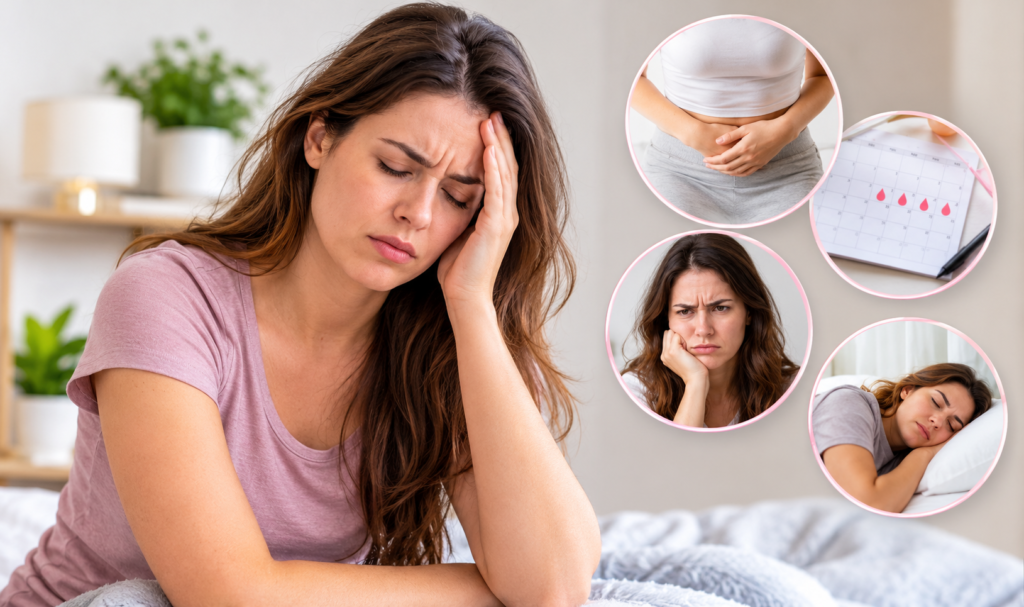
You sleep eight hours and still wake up tired. Your period shows up early one month and late the next. Your mood shifts for no clear reason. Most women write these things off as stress or a busy season of life. Sometimes that’s all it is. But often, the body is pointing to a hormonal imbalance, and the earlier you catch it, the easier it is to treat. At Hillside Family Medicine Clinic, we provide Women’s Health in Acworth, GA and see women from Kennesaw, Marietta, Dallas, Cartersville, Canton, and Powder Springs who want real answers about what their body is telling them.
What Is a Hormonal Imbalance?
Hormones are chemical messengers. They control your cycle, metabolism, sleep, mood, energy, and sex drive. The main ones in women include estrogen, progesterone, testosterone, thyroid hormones, cortisol, and insulin.
A hormonal imbalance in women happens when one or more of these levels runs too high or too low. Because hormones work together, even a small shift can show up in several places at once.
Early Signs of Hormonal Imbalance in Women
Changes in Your Menstrual Cycle
Your cycle is often the first place a problem shows up. Watch for:
- Irregular periods that come early, late, or skip months
- Periods that are much heavier or lighter than your normal
- Worse cramps or PMS than you used to have
- Spotting between periods
Fatigue That Sleep Doesn’t Fix
Feeling drained day after day, even with enough rest, can point to low thyroid function, cortisol changes, or low iron from heavy periods.
Mood Swings, Anxiety, or Low Mood
Shifting estrogen and progesterone affect brain chemicals that control mood. If irritability, anxiety, or sadness feel new or out of proportion, it’s worth a closer look. Our team also treats mood disorders when hormones aren’t the whole story.

Weight Changes You Can’t Explain
Gaining weight around the belly without changing how you eat is a common sign of insulin resistance, thyroid problems, or perimenopause. If the scale won’t move no matter what you try, medical weight loss support may help once the cause is clear.
Skin and Hair Changes
- Adult acne, especially along the jaw and chin
- Thinning hair on your head
- New hair growth on the face, chest, or back
- Dry skin or brittle nails
Sleep Problems, Hot Flashes, and Night Sweats
Trouble falling asleep, waking at 3 a.m., or waking up soaked in sweat are classic menopause symptoms. They can start years before your last period.
Low Sex Drive or Vaginal Dryness
Falling estrogen and testosterone can lower desire and cause dryness or pain during sex. These are common and treatable. We cover them openly in our sexual wellness care.
Common Causes of Hormone Changes in Women
- Perimenopause and menopause
- Thyroid disorders (overactive or underactive)
- PCOS (polycystic ovary syndrome)
- Long-term stress and poor sleep
- Insulin resistance or prediabetes
- Pregnancy and the months after giving birth
- Starting or stopping birth control
- Some medications

When Should You See a Doctor?
Book a visit if symptoms last more than two or three cycles, get in the way of work or relationships, or keep getting worse. Your yearly physical exam is also a good time to bring these up.
Get care right away if you have:
- Bleeding after menopause
- Bleeding that soaks a pad or tampon every hour for several hours
- Sudden, severe pelvic pain
How Hillside Family Medicine Checks Your Hormone Levels?
Every women’s health visit starts with your health history, your current symptoms, and any screenings you’re due for. We’ll talk through your cycle, energy, sleep, and any emotional or sexual changes you’ve noticed. Depending on your age and needs, your visit may include a pelvic exam, pap smear, breast exam, or lab work.
What Hormone Testing May Include?
- Estrogen and progesterone
- FSH and LH (helpful for perimenopause and fertility questions)
- Thyroid panel (TSH and related markers)
- Testosterone (often checked when PCOS is a concern)
- Blood sugar and A1C
- Cholesterol and iron levels
Some tests need to be drawn on certain days of your cycle, so we’ll tell you the best time to come in.
Treatment Options
Your plan depends on what the results show. It may include:
- Hormone replacement therapy (HRT) for menopause symptoms
- Birth control guidance and help with cycle regulation
- Thyroid medication when levels are off
- Diet and lifestyle changes through nutrition counseling
- Mental health support when mood is part of the picture

Daily Habits That Support Hormone Health
- Keep a steady sleep schedule
- Eat protein and fiber at each meal
- Cut back on added sugar and alcohol
- Move your body most days, including strength training
- Track your cycle and symptoms in an app or notebook
That symptom log is one of the most useful things you can bring to your appointment.
Hormone Care for Women Near Kennesaw, Marietta, and Dallas, GA
Our clinic is at 1685 Mars Hill Rd, Suite 201, in Acworth. It’s an easy drive for women in Kennesaw, Marietta, Dallas, Cartersville, Canton, and Powder Springs who want a women’s health clinic that listens and explains things in plain language.
Conclusion
Hormonal imbalance rarely shows up all at once. It starts with small changes: a cycle that shifts, energy that fades, a mood that doesn’t feel like yours. Paying attention to those early signs, and getting the right tests, can save you months or years of feeling off.
If you live in Acworth, Kennesaw, Marietta, Dallas, Cartersville, Canton, or Powder Springs, call Hillside Family Medicine Clinic at 770-485-0031 or visit to book your appointment.

FAQs
1. What are the first signs of hormonal imbalance in women?
The most common early signs are irregular periods, ongoing fatigue, mood swings, trouble sleeping, and weight gain around the belly. Many women notice cycle changes first.
2. Can hormonal imbalance cause weight gain?
Yes. Thyroid problems, insulin resistance, high cortisol, and falling estrogen during perimenopause can all make weight gain easier and weight loss harder.
3. At what age do women notice hormone changes?
It can happen at any age. PCOS and thyroid issues often appear in the teens to 30s. Perimenopause usually starts in the 40s, though some women notice changes in their mid-30s.
4. How is hormonal imbalance diagnosed?
Your provider reviews your symptoms and health history, then orders blood work. Common tests include estrogen, progesterone, FSH, LH, thyroid levels, testosterone, and blood sugar.
5. Can stress throw off my hormones?
Yes. Long-term stress raises cortisol, which can disrupt your cycle, sleep, appetite, and thyroid function.
6. Is hormonal imbalance the same as menopause?
No. Menopause is one cause of hormone changes, but younger women can have imbalances from PCOS, thyroid disease, stress, birth control changes, or the months after pregnancy.
7. Can a thyroid problem feel like a hormone imbalance?
Yes. An underactive or overactive thyroid causes fatigue, weight changes, hair thinning, mood shifts, and irregular periods. That’s why a thyroid panel is part of most hormone workups.
8. Is hormone replacement therapy safe for everyone?
No. HRT helps many women with menopause symptoms, but it may not be right if you have a history of certain cancers, blood clots, or stroke. Your provider will review your history before recommending it.
9. Can I balance my hormones without medication?
Sometimes. Better sleep, regular exercise, less sugar, and stress control can improve mild symptoms. Testing first helps you know whether lifestyle changes are enough.
10. Where can I get hormone testing near Kennesaw, Marietta, or Dallas, GA?
Hillside Family Medicine Clinic in Acworth offers hormone testing and women’s health visits for patients from Kennesaw, Marietta, Dallas, Cartersville, Canton, and Powder Springs. Call 770-485-0031 to schedule.